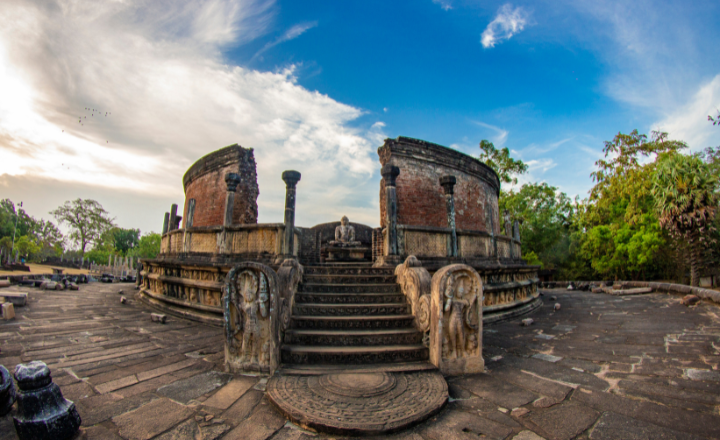
Location of Polonnaruwa
The ancient city of Polonnaruwa is one of Sri Lanka’s most magnificent UNESCO World Heritage Sites, located in the North Central Province, about 216 km from Colombo and 135 km from Kandy.
This historic royal capital was the second ancient kingdom of Sri Lanka after Anuradhapura, flourishing under King Parakramabahu I in the 12th century. The city is famed for its well-preserved ruins, massive stone statues, ancient stupas, and irrigation marvels that reveal the grandeur of Sri Lanka’s medieval civilization.
Today, Polonnaruwa is a highlight of the Cultural Triangle Sri Lanka, drawing travelers from around the world for its spiritual depth, artistry, and archaeological significance.
How to Reach Dambulla City
By Road (Bus / Taxi / Private Car)
Polonnaruwa is easily accessible by road from major Sri Lankan cities:
• From Colombo: Approx. 216 km (5–6 hours) via Kurunegala and Dambulla.
• From Kandy: Around 135 km (3–4 hours) via the A26 and A11 highways.
• From Dambulla / Sigiriya: About 65 km, an easy 1.5-hour drive through scenic countryside.
Regular intercity buses, private taxis, and chauffeur-driven cars operate daily between Colombo, Kandy, Dambulla, and Polonnaruwa.
By Train
The nearest railway station is Kaduruwela, located just 4 km from the Polonnaruwa archaeological site. Daily trains run from Colombo Fort, Kandy, and Batticaloa, offering a scenic and affordable journey.
By Air
Luxury travelers can use domestic air taxi services from Colombo (Ratmalana) or Katunayake (Bandaranaike International Airport) to Sigiriya Air Base, followed by a 1.5-hour road transfer to Polonnaruwa.
Top Attractions in Polonnaruwa and Nearby
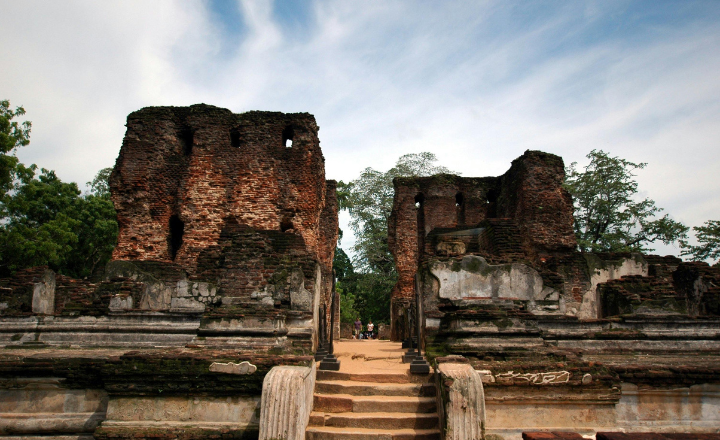
Polonnaruwa Archaeological Site
The Polonnaruwa Archaeological Park is a vast open-air museum that showcases the island’s rich royal heritage. Visitors can explore monumental ruins of palaces, temples, shrines, dagobas, and audience halls, surrounded by ancient stone walls and lush greenery.Bicycles or tuk-tuks are popular ways to tour the site.
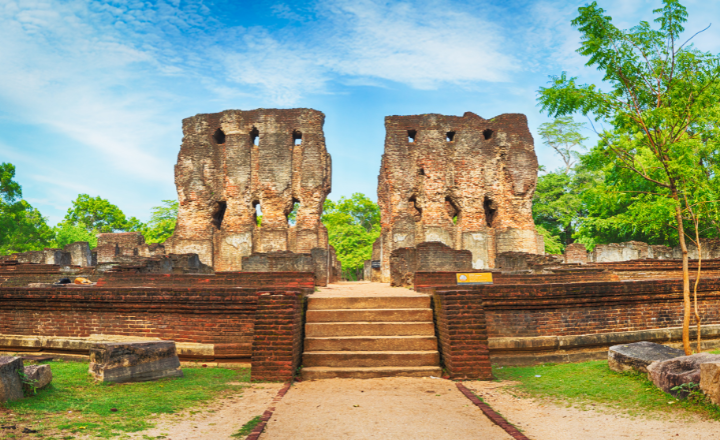
Royal Palace of King Parakramabahu
Once a seven-story palace complex, the Royal Palace of King Parakramabahu I was the administrative heart of Polonnaruwa. Although much of it lies in ruins today, the remaining stone walls, carved pillars, and guard chambers illustrate the city’s royal magnificence.
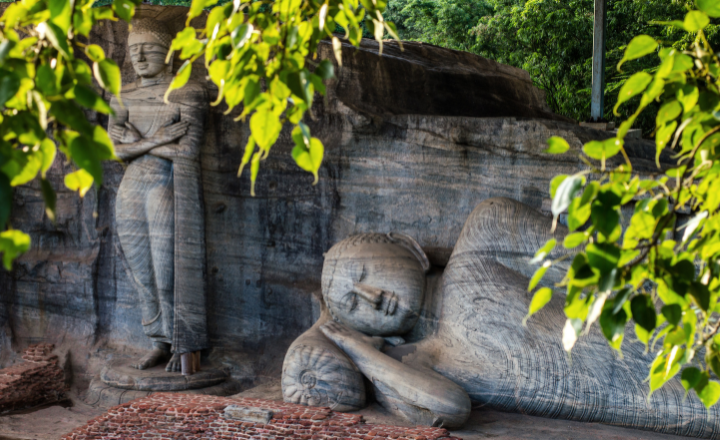
Gal Vihara (Rock Temple)
A masterpiece of Sinhalese stone carving, Gal Vihara Polonnaruwa features four colossal Buddha statues carved from a single granite rock.The standing, seated, and reclining Buddha figures represent the pinnacle of ancient craftsmanship and remain one of the most photographed icons of Sri Lankan Buddhism.
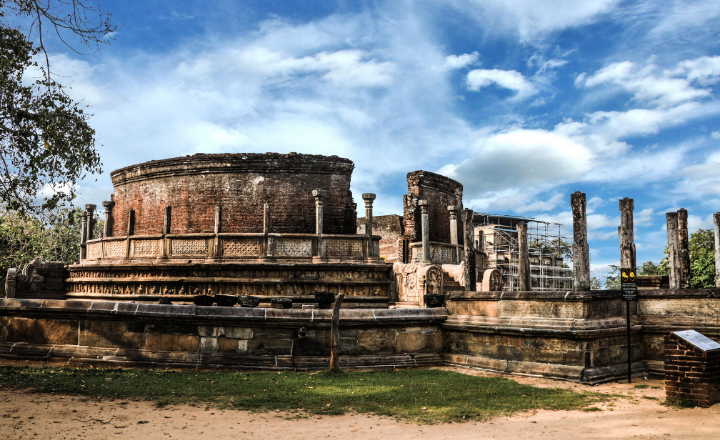
Vatadage (Sacred Quadrangle)
Located in the Sacred Quadrangle, the Vatadage is a circular relic house built to enshrine the Sacred Tooth Relic.Its elegant symmetry, moonstones, and guardian stones reflect the artistic brilliance of the Polonnaruwa period. It is among the most beautiful examples of Buddhist architecture in Sri Lanka.
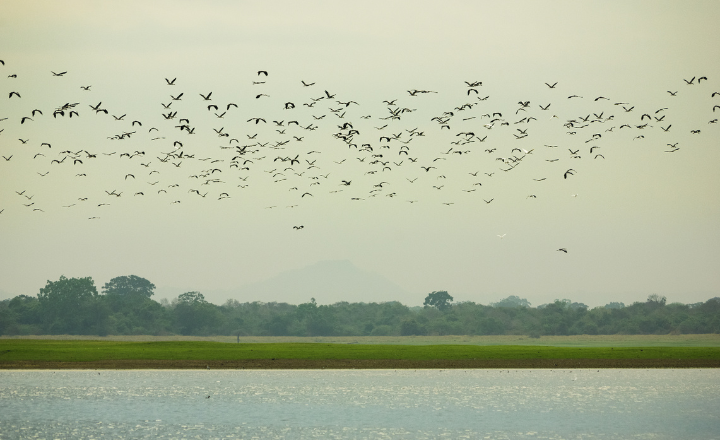
Parakrama Samudra (Sea of Parakrama)
This vast reservoir, constructed by King Parakramabahu, symbolizes the ancient engineering genius of the Sinhalese. Spanning over 2,500 hectares, it continues to irrigate surrounding farmlands today. Sunset views over the reservoir are breathtaking.
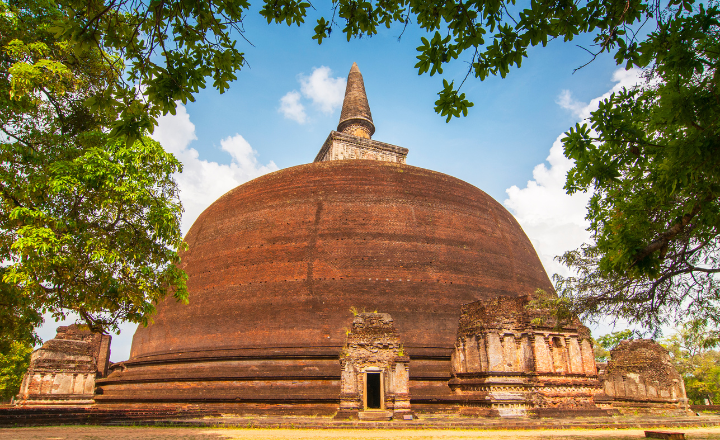
Rankoth Vehera
One of the largest stupas in Sri Lanka, Rankoth Vehera stands 55 meters tall, built in classic Anuradhapura style. It remains an active place of worship and a peaceful stop for visitors exploring the ancient city.
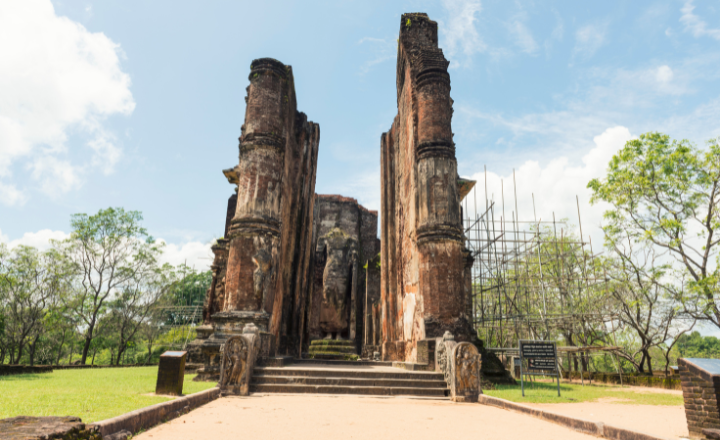
Lankatilaka Vihara
The Lankatilaka Image House is renowned for its towering brick walls and the impressive standing Buddha statue that once stood over 14 meters high. It remains one of the most awe-inspiring sights in the Polonnaruwa complex.
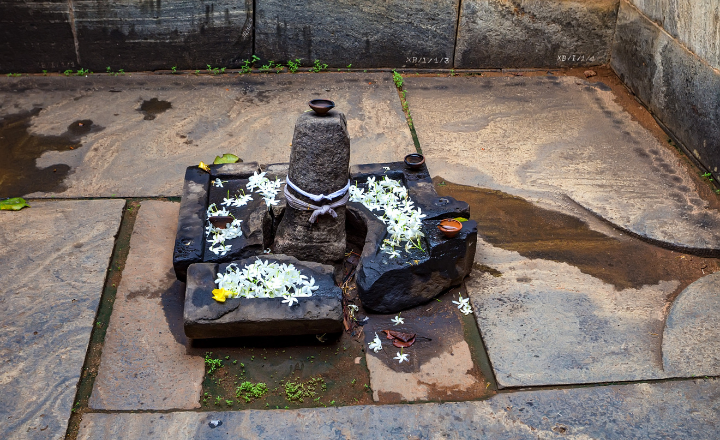
Shiva Devalaya & Hindu Shrines
Reflecting the Chola influence, Polonnaruwa also houses several Hindu temples dedicated to Lord Shiva, illustrating the city’s cultural and religious diversity. The Shiva Devalaya No. 2 is the oldest Hindu shrine in the complex.
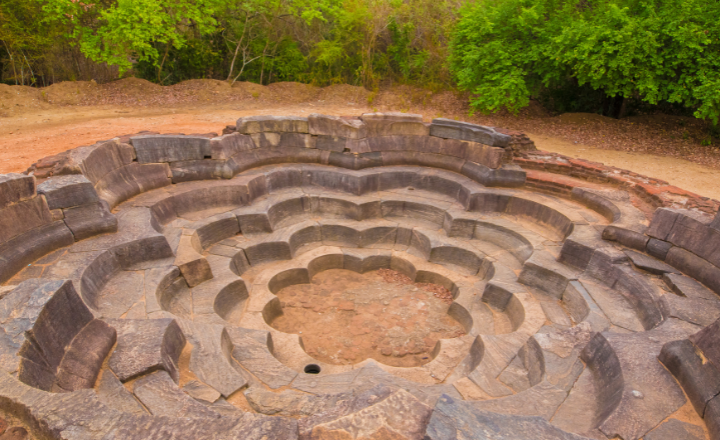
Nelum Pokuna (Lotus Pond)
A beautifully designed lotus-shaped pond believed to be used by royal monks. Its architectural design highlights the precision and aesthetic sense of Polonnaruwa’s ancient engineers.
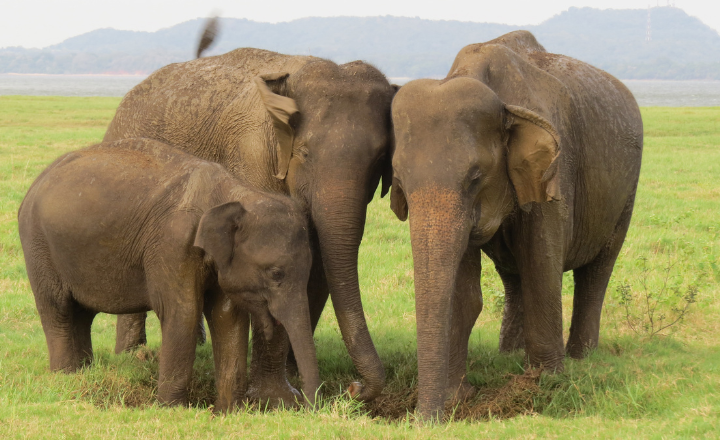
Nearby Attractions
• Minneriya National Park: Famous for “The Gathering” — the world’s largest annual meeting of wild elephants (July–September).
• Kaudulla National Park: Offers excellent safari opportunities and wildlife photography.
• Giritale Tank: A serene lake ideal for birdwatching and sunset picnics.
Best Time to Visit Polonnaruwa
The best time to visit Polonnaruwa is between June and September and December to February, when the weather is dry and pleasant.
• December – February: Ideal for sightseeing and cycling through the ruins.
• March – May: Warm, less crowded, good for photographers.
• June – September: Excellent for visiting Minneriya and Kaudulla safaris.
• October – November: Occasional showers, lush scenery, and fewer tourists.
Morning visits (7–9 AM) or late afternoons (4–6 PM) are best for exploring comfortably and capturing stunning golden light for photos.
Visitor & Travel Tips
• Rent a bicycle or hire a tuk-tuk for convenient site exploration.
• Wear light clothing, a hat, and sunscreen — the archaeological park is vast and sunny.
• Dress modestly when entering temples and stupas.
• Carry water — distances between ruins can be long.
• Buy the official Polonnaruwa Heritage Site ticket at the main entrance.
• Combine your visit with Sigiriya, Dambulla, or a Minneriya Elephant Safari for a full-day cultural experience.
Why Visit Polonnaruwa in 2026?
In 2025, Polonnaruwa continues to be one of the top cultural destinations in Sri Lanka, attracting travelers from Europe, the UK, the USA, and the Middle East.
Its UNESCO-listed ruins, timeless artistry, and well-preserved monuments make it a living museum of Sri Lanka’s golden age.
Whether you’re a history buff, photographer, or cultural traveler, Polonnaruwa offers a fascinating journey through ancient royal life, Buddhist architecture, and local heritage.
Hotels Near Polonnaruwa (3–5 Star Rated)
Here are the best hotels in and around Polonnaruwa, offering luxury, comfort, and scenic settings:
• The Lake Hotel Polonnaruwa (★★★★) – Overlooking Parakrama Samudra; ideal for relaxation with modern comforts.
• Hotel Sudu Araliya (★★★★) – Beautiful lakeside resort featuring pool, spa, and fine dining.
• Ekho Lake House Polonnaruwa (★★★★★) – Historic luxury retreat with stunning reservoir views.
• Deer Park Hotel (★★★★★) – Eco-luxury stay near Giritale Lake with jungle surroundings.
• Siyanco Holiday Resort (★★★) – Convenient stay near the archaeological site with friendly service.
• Tishan Holiday Resort (★★★) – Great value and ideal location for heritage travelers.
• Ruins Chaaya Hotel (★★★★) – Family-friendly resort blending culture with comfort.
• The Lake Hotel by Thilanka (★★★★) – Scenic lakefront stay offering boat rides and heritage ambiance.
• Giritale Hotel (★★★★) – Overlooks Giritale Tank; perfect for birdwatchers and sunset lovers.
• Heritance Kandalama (★★★★★) – A short drive from Polonnaruwa; award-winning eco-hotel by Geoffrey Bawa.